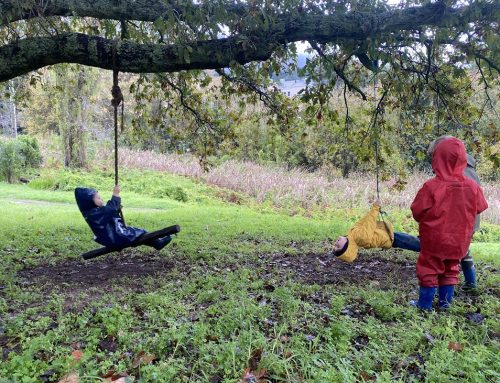
It’s not uncommon practice to want to stay indoors when the skies darken and rain and fog rolls in. Of course. Indoors is warm, comfy, our socks stay dry and we can enjoy the steam from our tea cup swirling in a toasty room. Hair stays where it should thanks to the lack of tumultuous winds and fingernails stay clean and dry — our technology is grateful. Our grown-up penchant for comfort has led to most outdoor play for our kids pausing when the weather changes too.
But why should play and learning pause just because the conditions change? Surely therein lies a strength not a weakness?
Forest schools incorporate this insight into their approach. By embracing the inherent lessons each season offers, they tap into an irreplaceable holistic developmental benefit — namely that children who play all year round, in all types of conditions, are hard wired to be more resilient. They develop the tenacity and fortitude to thrive through all of life’s conditions — the easy and the hard.
Let’s take a look at what each season offers, as well as some tips to keep your all weather outdoor play more fun and enjoyable. As they say in forest school circles — “there’s no such thing as bad weather, only bad clothes!”
 Learning through play in summer
Summer is the season for being
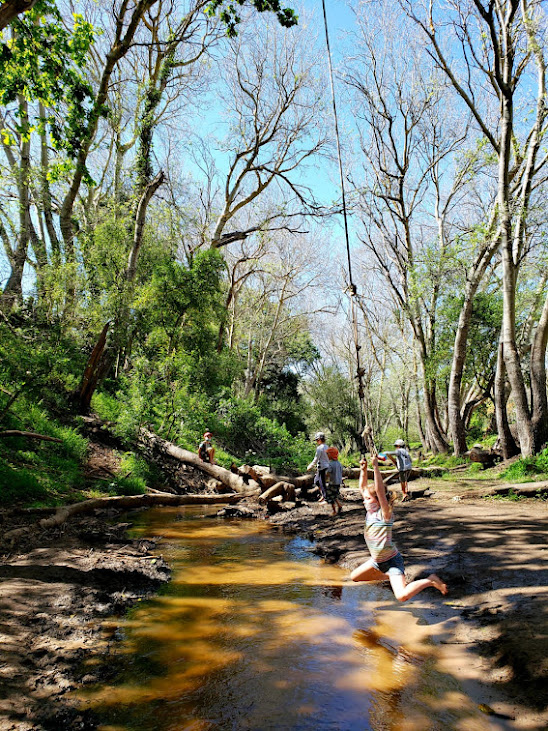
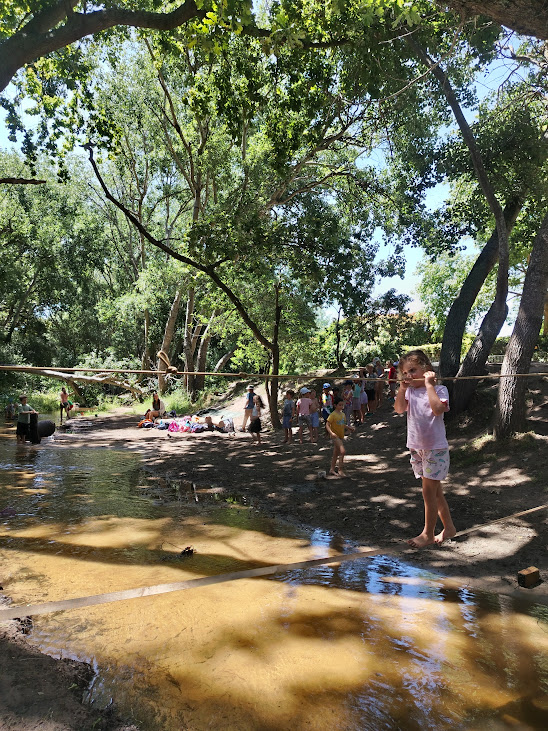
Summer is the season of sensory abundance — barefoot on grass, splashing through rivers, moulding memories in mud kitchens, clambering over boulders and logs through long golden hours of unstructured play.
- Facilitators and educators pay special attention to sun protection and hydration, as well as giving the body cooling down periods in the shade.
- Children’s bodies build heat tolerance and sun awareness
- Summer strengthens immunity by activating Vitamin D synthesis
- Children’s skin microbiome is enriched through contact with soil (and therefore also their gut biome)
- They experience a reduced indoor pathogen exposure during high UV months
 Summer wardrobe, snack box & accessories tip
- Sun hat + long-sleeved rash top
- Sunblock sunblock sunblock
- Lightweight waterproof layer for surprise showers
- Crocs or velcro strap on sandals that allow for water play minus sharp rocks
- A large water bottle and plenty of seasonal fruit like berries for antioxidants

 Learning through play in autumn
Autumn is the season for noticing
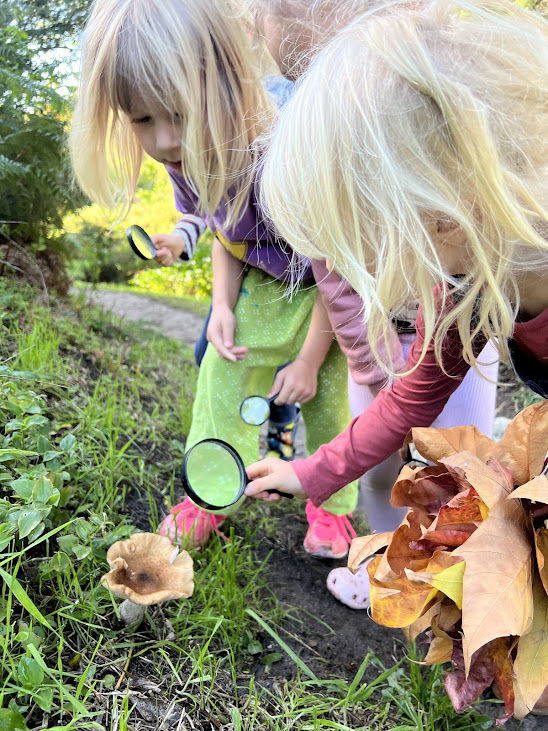
Autumn is the season of change and harvest — twirling dances through falling leaves, foraging for mushrooms and fallen seed pods, fire-lighting and watching the wind awaken.
This season introduces the concept of impermanence through nature and is ideal for slow gathering walks, art activities and creativity through reflection.
- Facilitators and educators pay special attention to layering up
- Children gain a gradual cold acclimatisation before winter
- They receive a continued outdoor microbiome exposure as their immune system primes for the cold season
- Their bodies build respiratory resilience as they continue to exert themselves in cooler weather
 Autumn wardrobe, snack box & accessories tip
- Waterproof trousers or mud suits are non-negotiable.
- Thin base layer + mid fleece + waterproof shell.
- Always pack extra socks in the bag
- Still keep the hat in the bag as the sun’s rays can still visit from time to time
- Bring out that warm thermos for tea
- Roasted seasonal root veggies

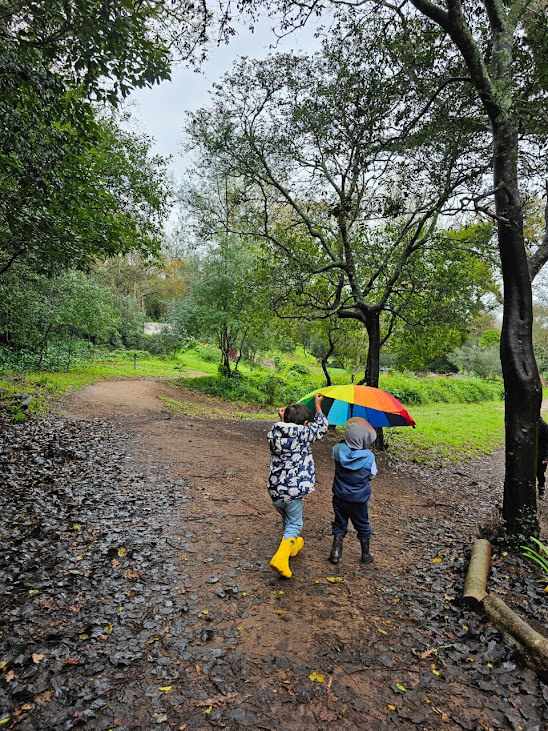
 Learning through play in winter
Winter is the season for feeling
Winter is the season of quiet and wonder — the colour palette subdues, the creatures begin to hibernate and hide away, the forest turns bare and minimal. While we may not have snow in South Africa, some chilly mornings do invite frost on leaves and experiencing hail and always a muddy trail. It’s a cozy time for hot chocolates around a fire circle, delving into the art of storytelling and the practice of listening.
- Winter develops cold tolerance and calm focus.
- Cold air exposure stimulates brown adipose tissue and thermogenesis (the body’s heatmaking process).
- Children who are cold regularly show lower cortisol stress markers. So the “cold makes you sick” myth can be debunked.
🌧️🧣Winter wardrobe, snack box & accessories tip
- Layering is everything: thermal base → wool or fleece mid layer → windproof waterproof outer layer.
- Wool or merino socks keep toes warm, wick moisture and prevent blisters.
- Mittens over gloves to keep fingers in body heat generating contact
- A warm beanie that covers ears.
- A buff or cowl is better for play as it doesn’t have long tendrils that drag in the mud and get caught in zippers.
- Wellies and muddy buddies are essential
- That thermos with tea is now crucial. Herbal teas help the immune system: think rooibos with honey, lemon and ginger to help keep the body resilient
- A soup thermos is also great for lunch time

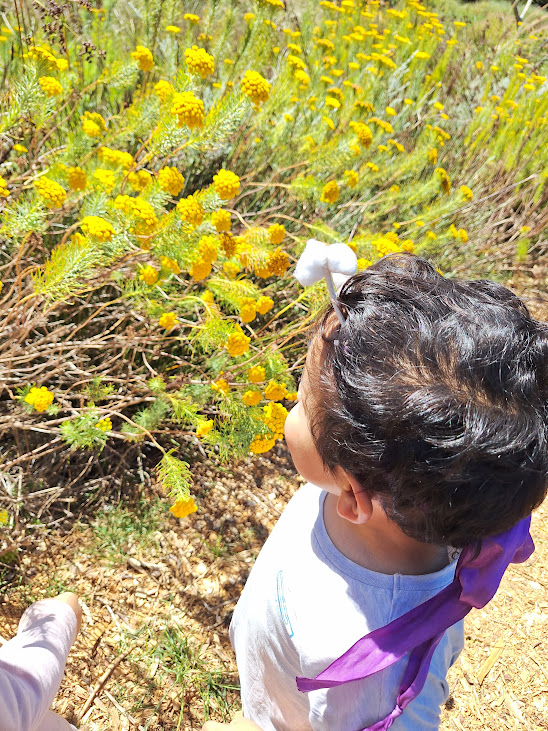
 Learning through play in spring
Spring is the season for discovering
Spring marks the return to seasons of discovery and new energy — first buds, a plethora of river tadpoles, hatchlings & planting seeds in the garden. Natural curiosity peaks during spring as children want to understand how their world works.
- Facilitators and educators lean into science-led exploration and movement
- Children gain pollen exposure and early allergenic tolerance
- A return of more boisterous outdoor physical intensity supports cardiovascular development
- Serotonin receives a boost due to the increase in soil digging and planting activities of spring
🌸 ☔Spring wardrobe, snack box & accessories tip
- September is a bit of a weather fibber — pack a light waterproof even on sunny days.
- A change of clothes in their backpack is just smart parenting.
- Fill lunch boxes with easy on the go snacking as attention spans are flightier.
- This season beckons for ‘collectables’. Give kids clear little containers and envelops to collect all their forest treasures like true explorers.
So as you can see, there really is deep magic in learning through play of all four seasons, not just for the way in which they learn through different modalities and environments but also for how it strengthens their bodies. By leaning into the discomfort (and packing an extra pair of socks) we can let our child belong to all four seasons.
Not only will they be more tolerant grownups because of it, but their bodies will be healthier for it. Most notably though you’ll arm your child with a mind more adept at understanding life exists in cycles and then for every season of hardship, difficulty and sparse energy and resources there is one of ease and abundance just waiting around the corner.