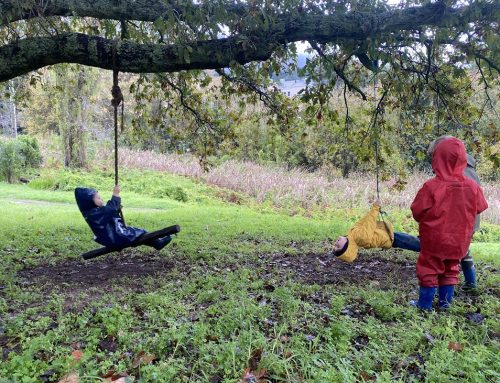
Because the muddy hands matter more than the masterpiece, we’ve put together a tidy list of 21 forest school activities to embrace winter with your little ones.
Perhaps you’ve felt it? The modern machine’s constant hum to finish things, make more, produce produce produce. It’s the relentless spin off from a consumerist society and one we’ve unintentionally siphoned down to our children. We place more emphasis on making artworks or cards for mommy and daddy than we do on simply creating. Not every act of creativity has to nor should it lead to the becoming of something, much less “something useful”. Art was never meant to be useful in the modern sense. Its sole reason for coming through us and to us is to remind us that we are co-creators, and that simply by existing and by observing, we can make beauty together with the natural world.
And this is where the magic of winter can inspire forest school activities for grown ups and children to share in.
At forest school we breathe life into this ethos by reminding kids that the act of creative expression is its own thing – a “goal” unto itself. These creative nature play forest school activities and practices are how we guide little ones toward making rather than producing.

1. Leave it where you found it
Build a beautiful leaf spiral, admire it, and walk away. No photo required.
Not everything that gets made in the forest is meant to be taken home. Some things can simply belong to the wind or bring a smile to the next passer by. We encourage acting on creative impulse, not over thinking the creative act and simply moving on from it to help practice non-attachment.
2. Make a gift for the trees
Weave bark, berries and feathers into a little offering — then hang it on a branch and leave it to the weather.
This is a lovely practice to help the kids ground in gratitude and express their thankfulness to nature through offerings of creative expressions.
3. Build a nature mandala
Collect autumn’s best — seed pods, mushrooms, moss, red leaves — and arrange them in concentric circles on the forest floor. The forest keeps it.
Building nature mandalas invites kids to gather and create with whatever that season is abundant in, to notice and to create with that which is in abundance in their present moment.
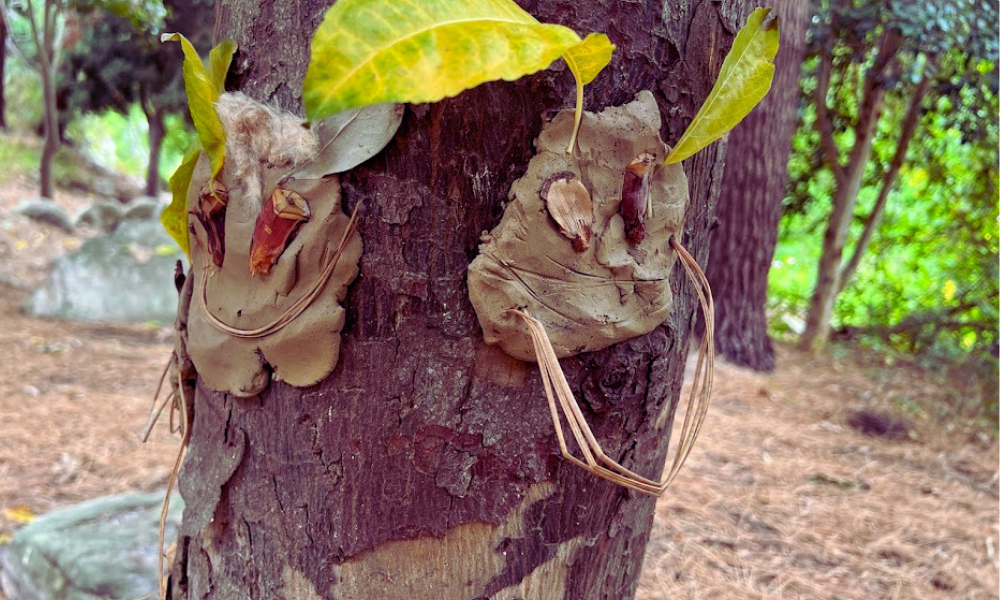
4. Count the colours in the mud
Brown is never just brown. Mix soil, clay and water to find all the shades hiding in a puddle.
Even a rock face can be your canvas and sticks and bound bristled pine needles can be your paint brush.
5. Let the rain finish your painting
Use natural pigments on bark or stone, then leave your work outside. See what the afternoon shower decides.
It’s wonderful to watch children run outside in awe at the “new pictures” the rain has made with their artworks. This helps them remain open to life happening and to circumstance affecting the outcome with less fixed mind thinking.
6. Ask “what does this smell like?” before anything else
Bark, wet leaf litter, pine resin, crushed herb. Smell first, name later.
The forest floor is so rich in aromas. Noticing and engaging with our senses and using language to describe our experience is just as important an aspect to creativity. It’s how all great poets are born after all.
7. Wear your face like the earth
Clay face painting is ancient and joyful. The muddy face is the artwork.
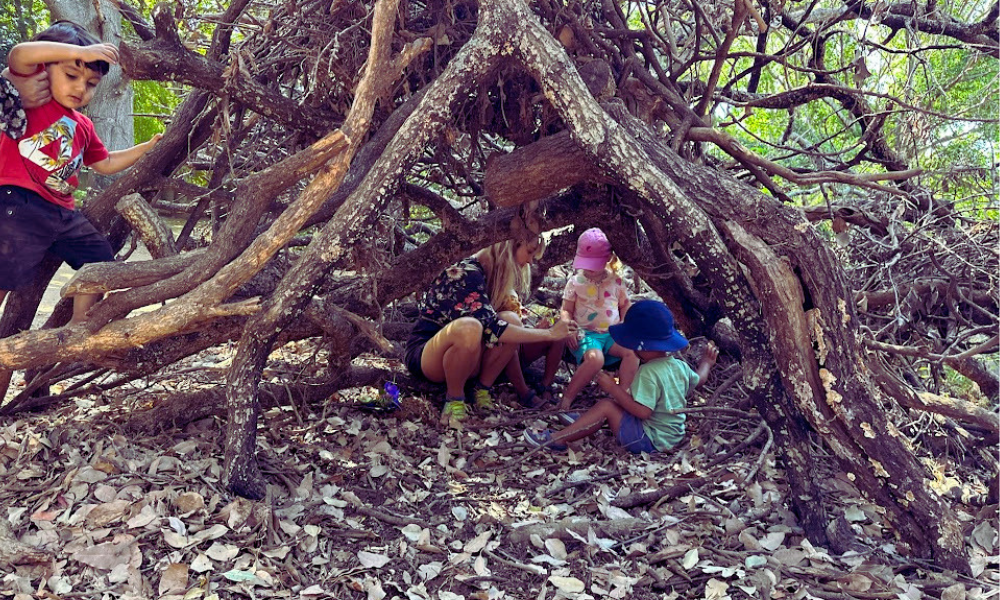
8. Follow a twig downstream.
Drop a leaf or a twig into moving water and walk alongside it as long as you can. No destination needed.
Noticing how the current plays and swirls moving debris is how we teach little ones to connect to the rhythm and movement within them, it’s a practice of soft fascination that relaxes the senses and becomes a little meditation.
9. Build a house for something small
A beetle, a fairy, a friendly spider. Twigs, bark tiles, a roof of lichen. Inhabited or not — the making is the thing.
Sometimes making something and not knowing who you’re making it for or how it will be used is such a joy. The kids return week on week to see who has moved in and perhaps how their making use of their new little shelter.
10. Listen for one minute flat
Sit very still. How many sounds can you count? Wind, birdcall, drip, crunch? Winter silence is its own music.
And indeed each season has a song of its own. When we notice the choir of the woods, when there’s pitter patter on leaves and when there’s frogs in the river we reach wide into embracing all senses not just our visual acuity.
11. Name a cloud, a tree, a puddle
Not the scientific name — the child’s name. “Grumble cloud.” “The crooked friend.” “Jumping lake.”
Children are SO creative with their observations and combinations of language. The honesty in their communication is utterly refreshing and should be encouraged to be expressed as often as possible.
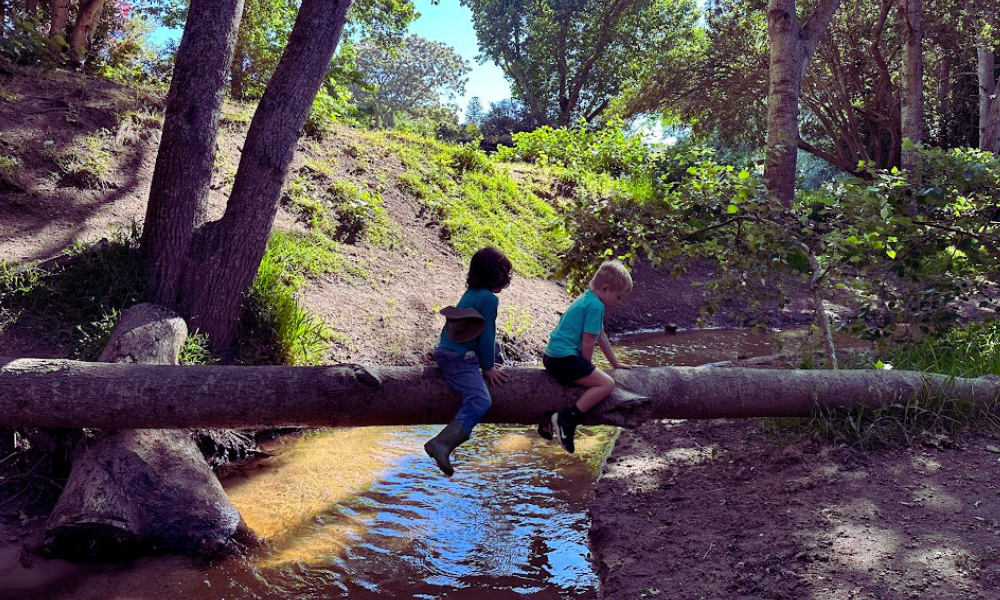
12. Sort without a rule
Gather a pile of natural objects and sort them — but only the child decides the rule. Rough and smooth? Happy and sad? Things a frog would like?
This is a truly fun game to help children notice things beyond the normal categories and awakens linguistic literacy. Sometimes the sorting rules they come up with reveal more than we may expect.
13. Notice what the cold changed
Compare the same tree or patch of ground week by week through autumn into winter. What came? What left?
Nothing in nature is static. Practices like this one teach kids to build continuity in their acknowledgement of their environment and to take in the background detail beyond the obvious big tree, bench and sign post.
14. Make a soup you’ll never eat
Mud kitchen classics: acorn broth, petal stew, seed porridge. The stirring and simmering is everything.
This is where kids really get to enact their family life and real world observations, making sense of their exposures through play and processing the bits they struggle with and integrating the aspects they love even deeper.
15. Draw with what’s underfoot
Charcoal from a fire pit, a chalk stone, a wet stick on dry bark. No paper. No product.

16. Give a fallen thing a second life
A snapped branch becomes a wand, a bridge, a xylophone.
What does this thing want to be now? And so the practice of new life and metamorphosis is born.
17. Move like the weather
Be rain. Be wind. Hybernate like a seed. Winter has a whole vocabulary of movement.
Many of our facilitators, especially those with yoga and musical training love to use nature as the foundational teacher for movement. And its a somatic language that children speak intuitively. There is no wrong movement and no “doing it better” there are just bodies being.
18. Build the tallest thing that will definitely fall
Stack rocks or sticks as high as they’ll go. Celebrate the topple as much as the tower.
Not crumbling seems to always be the goal and yet there’s so much relief to be felt in tumbling down and getting back up again.
19. Ask the question, not the answer
“I wonder why…” is more powerful than “this is because…” Let the child sit with the not-knowing for a while.
This is a powerful practice to prepare them for life’s many unanswered questions, the younger they are when they learn to love the questions, the better. It fosters open mindedness and softens rigidity to knowing.
20. Find the tiniest living thing you can
A lichen, a mite, a seedling cracking through mud. Winter is full of small, stubborn life if you get close enough.
We have a tendency to celebrate the large and the obvious in life, but when we acknowledge how much life is infinitesimally small, we not only embrace our interconnectedness with it all but learn to tread softer and lighter in a loud and proud world.
21. Go home with empty hands
The best forest session ends with nothing to carry — just a muddy face, a full heart, and a story they’ll tell at dinner.
Take these nature play forest school activities with you on your next forest walk and enjoy the magic and wonder your tiny human shares with you in the process.
Often, we’ve found, we learn more from our children when you bring less to the lesson than they learn from us.