As a culture we’ve become extremely good at creating structure and planning and prioritising efficiency and productivity. But where does that leave our little ones? Still learning about the world and their tiny developing bodies and minds in it?
The first three years of a child’s life represent the most critical period for brain development, emotional security, and the foundation of lifelong wellbeing.
In this month’s article, we want to explore the early childhood bonding with your toddler and the critical role this plays on their neural and psychological development.

But we’re not talking about directive play and structured activities you and your toddler should be doing together to make sure they excel at X or Y.
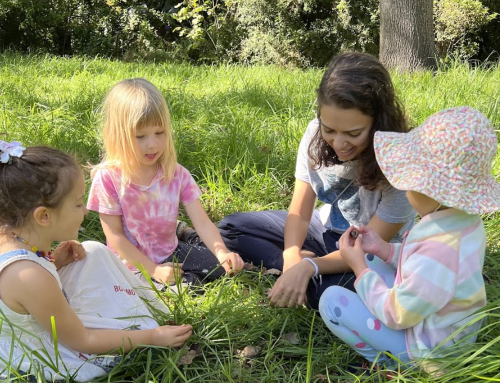
No, we’re talking about the kind of languid whiling away of time under trees, in meadows and along babbling brooks with a tiny human in tow that our hustle-hard-society has left virtually no permission for. The kind you long for in the pit of your soul but would feel infinitely guilty to indulge in.
Well, what if we told you that science backs exactly this kind of time together, ensuring the best development of your toddler’s emotional wellbeing for the rest of their life?
Read on to learn more.

The importance of being there in the beginning
Psychoanalyst Erika Komisar‘s groundbreaking research reveals that a mother’s (or critical care giver’s) emotional and physical presence in her child’s life–especially during the first three years–means that her child has a greater chance of growing up emotionally healthy, happy, secure, and resilient.
When we combine this essential presence with the rich, sensory world of nature, we create optimal conditions for healthy attachment and neural development.
Early childhood (0–8 years) is a time of rapid brain development supported by spontaneous and informal learning from the surrounding environment.
Meaningful contact with nature during the early years of life sets up rich scopes for such spontaneous learning—especially in the first three years, a period in life that determines all future learning, behaviour, and health.

Five Critical Reasons Why Early Bonding in Nature Matters
1. Secure Attachment Forms the Foundation of Emotional Resilience
Early caregiver-child bonds, shape emotional development & future relationships. The first three years are when attachment patterns become deeply embedded in a child’s developing brain. Secure attachment creates the neurological foundation for emotional regulation, empathy, and healthy relationships throughout life.
How Forest School Addresses This:
- Our intimate, small-group sessions allow for consistent, responsive interactions between parent and child in a calm, unhurried natural environment.
- Children can tell when we are truly engaged and observing them. They can feel your authentic desire to connect.
- The freedom from digital distractions and structured activities enables exactly this genuine attunement and emotional co-regulation.

2. Critical Brain Architecture Develops Through Responsive Relationships
During the first three years, the brain forms over one million neural connections per second. This rapid development is entirely dependent on the quality of early relationships and environmental stimulation. Maternal presence and nurturing are critical for the emotional development of children. By prioritising emotional security and providing consistent, sensitive care, parents lay the foundation for a lifetime of resilience and mental well-being.
How Forest School Addresses This:
- The dynamic forest canopy and diverse ecology along flowing rivers are exactly the multi-sensory natural environment that can provide this rich, varied stimulation to support optimal brain development.
- Parents learn to follow their child’s natural curiosity and interests, creating thousands of micro-moments of connection – looking at bugs, inspecting leaf patterns or studying the stick they find interesting – that build neural pathways for learning and emotional regulation.

3. Unstructured Play Builds Confidence and Independence
Young children learn best through self-directed exploration and play. When parents are present and available (looking on intently and calmly without being engaged in another activity) and without being intrusive as to how the child must engage with their environment, children develop confidence to explore their world while knowing they have a secure base to return to. When they can turn around and see a parent (or primary caregiver) there, they feel safe to continue venturing into their discoveries.
Through regular and repeated activities in a natural setting, children become more relaxed, overcome any fears, have fun, connect with nature as they come to know it better.
How Forest School Addresses This:
- Our child-led approach allows little ones to set their own pace and follow their interests.
- Parents learn to step back and observe, offering support when needed while allowing their child to experience the joy of discovery and mastery in nature’s safe playground.
- It’s an amazing thing to see how this tiny human that has come through you is curiously finding their way in our world, all of their own intrinsic drive.

4. Nature Reduces Stress and Promotes Optimal Development
Stepping into the woods instantly melts our tensions and anxieties. Leaves rustling, dappled light and the aromatic scent of natural pine among bird twitter – the natural world is our most reliably effective full body tranquiliser, providing a calming, restorative environment that reduces cortisol levels in both children and parents. This stress reduction is crucial for healthy brain development and secure attachment formation. Children who are connected to nature have better health, higher satisfaction with life, and develop enriching pro-environment behaviors. (And we can no longer afford to live in a world without pro-environment thinkers!)
How Forest School Addresses This:
- The peaceful woodland setting naturally regulates nervous systems, creating ideal conditions for bonding.
- Regular time in nature helps establish healthy circadian rhythms which is great for sound sleeping and energised wake times and provides the sensory experiences that support optimal neurological development.

5. Shared Wonder Creates Deep Emotional Connection
When parents and children experience the magic of nature together—watching a butterfly emerge, observing ladybugs crawl fro one arm to another, discovering a hidden stream with wiggling tadpoles, or simply lying under trees and finding shapes in the clouds together—they create shared memories and emotional bonds that last a lifetime. It’s hard to quantify and measure the impact of these moments but their resonance has a lasting impact on our holistic interconnected systems.
Outside activities encourage a deeper appreciation for nature, nurture a sense of wonder, build connections, and ignite creativity.
How Forest School Addresses This:
- Our sessions are designed to facilitate moments of shared discovery and wonder. Parents learn to see the world through their child’s eyes, and with the support of a forest school educator always on hand, both parents and children can deepen their connection while building their child’s confidence and sense of security in the world.
The time is now.
The neurological patterns formed in the first three years determine emotional wellbeing for life.
While separation anxiety peaks between 8-18 months, the attachment foundation laid during this period shapes decades of future relationships and mental health.
Regular weekly forest school sessions strip away modern distractions, creating space for authentic parent-child connection. The consistent presence you provide during these early years—your attention, your responsiveness and your willingness to slow down to the pace of your young growing offspring—directly builds your child’s capacity for emotional regulation and secure relationships.
0-3 is a critical and beautiful window, and a short one at that. The time to take meaningful action is now.
The forest is waiting. Book weekly sessions for you and your little one and enjoy a lifetime of compounded comfort and intentional connection with your child.